
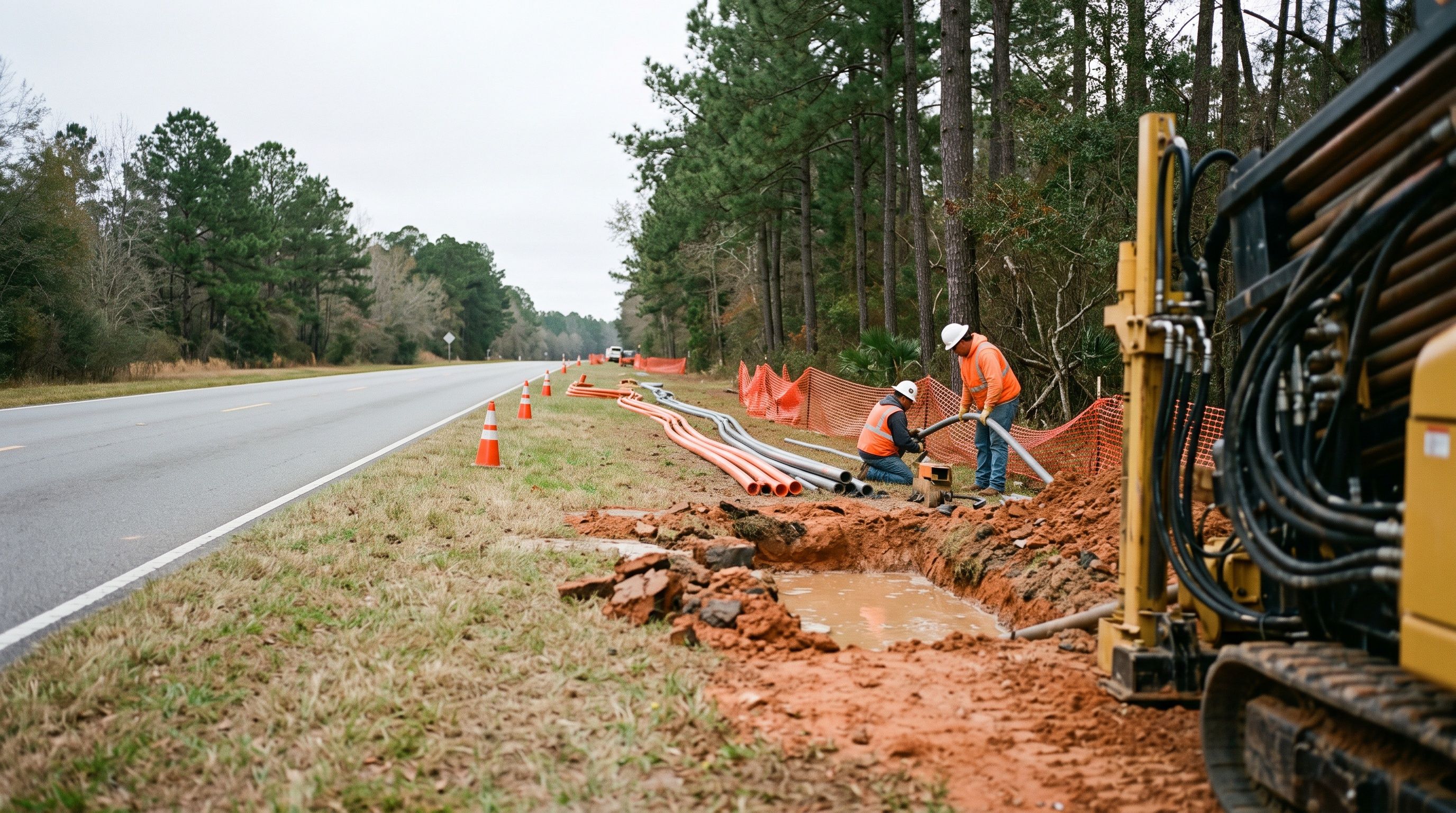
Conway, SC · Directional drilling · Auger boring · Microtunneling
Trenchless utility contractors who go under the road, not through it.
Trenchmark Underground Co. installs water, sewer, gas, power and fiber beneath highways, railroads and rivers across the Carolinas - bored, cased, tested and handed over with an as-built. The surface above the crossing is left the way we found it.
- Send plans, get a number back in five business days
- Bonded, insured and prequalified with SCDOT & NCDOT
- 24 years underground in the Carolinas
- 24 yearsUnderground in the Carolinas
- 1.6M ftOf pipe and conduit installed
- 96 inLargest finished diameter
- 0.71 EMRExperience modification rate
01 - Capabilities
Four ways under, and the honest limits of each
The method is chosen by the ground, the diameter and what is sitting on top - not by what happens to be on the yard. Here is the range each of our machines actually covers.
Horizontal Directional DrillingHDD
Steerable bores that go under the obstacle and come back up on the far side.
How it works and where it fits- Maximum pipe diameter: 36 in
- Maximum single shot: 2,200 ft
- Typical depth of cover: 8 – 60 ft
Auger BoringAuger
Jacked steel casing on grade, the standard for rail and highway crossings.
How it works and where it fits- Casing diameter: 12 – 72 in
- Maximum single drive: 600 ft
- Grade tolerance: ±1% on a cased drive
Pilot Tube Guided BorePilot tube
Line-and-grade accuracy for small gravity sewer in tight quarters.
How it works and where it fits- Product pipe diameter: 8 – 30 in
- Maximum drive length: 400 ft
- Line and grade accuracy: ±0.5 in over the drive
MicrotunnelingMTBM
Remote-operated tunnelling for deep, wet and unforgiving ground.
How it works and where it fits- Finished diameter: 30 – 96 in
- Maximum drive length: 1,000 ft between shafts
- Working depth: To 65 ft below grade
02 - What we install
Every color on the locate map
Before anyone digs, a locate crew sprays the ground in the APWA color code. We install under most of it - and we work around the rest without hitting it.
- Blue
Potable water
Distribution main and transmission, ductile iron through fusible PVC and HDPE.
- Green
Sewer & storm drainage
Gravity sanitary, force main, outfalls and storm crossings on grade.
- Yellow
Gas & petroleum
Distribution and transmission for gas utilities, to the operator’s own procedure.
- Red
Electric power
Duct bank and conduit for distribution, substation feeds and street lighting.
- Orange
Communications & fiber
Conduit and innerduct for carriers, co-ops and municipal broadband builds.
- Purple
Reclaimed water & irrigation
Reuse main and irrigation supply, kept clearly separated from potable.
Pink marks temporary survey control and white marks the excavation itself. In South Carolina the law is three full working days’ notice to SC811 before you break ground, and we pothole every crossing we cannot see regardless of what the paint says.
03 - Who we work for
Four customers who want four different things
A DOT contract officer and a superintendent standing in a muddy hole are not the same buyer. We answer to both, and we know which one needs the paperwork first.
General contractors
You have a crossing inside a bigger job and a schedule that cannot move. We price from your plans, mobilise inside your window, and hand you a signed as-built for the closeout package.
Municipalities & utility districts
Public bid, public money, and a street full of residents. We work to your standard specification, hold the pre-construction meeting, and keep the road open.
Investor-owned utilities
Gas, power, water and telecom operators with their own construction procedures and their own contractor safety program. We qualify to yours before the first bore.
State DOT & rail carriers
Encroachment permits, flagging, track protection and casing built to the carrier standard. We hold the prequalification and carry the limits these agencies require.
04 - Safety
The number that decides whether we are allowed to bid
On this kind of work safety is not a slogan on a truck door, it is a rating that gets checked before a bid is opened. Ours is below one, and we would rather show you why.
- 0.71EMRThree-year experience modification rate
- 1.9TRIRTotal recordable incident rate
- 100%OSHA 30Of supervisors hold the 30-hour card
- 412kHoursWorked since the last lost-time incident
05 - Recent work
Crossings we have already made
Owner, method, diameter and length - the four things that make a job a useful reference rather than a nice photograph.
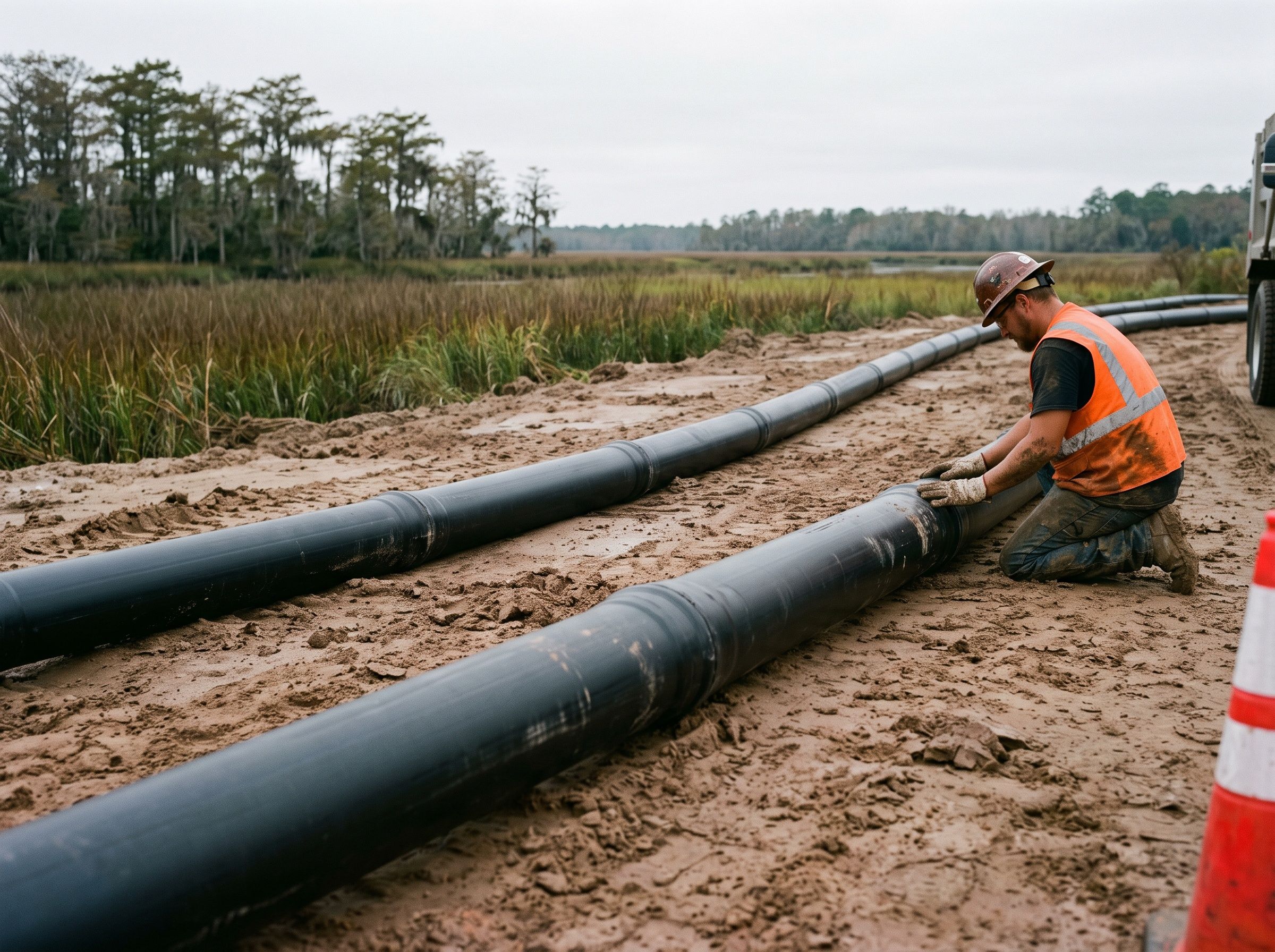
Waccamaw River force main crossing
A single shot under the river and both floodplains, kept 38 ft below the channel bottom with no in-water work and no disturbance to the wetland on either bank.
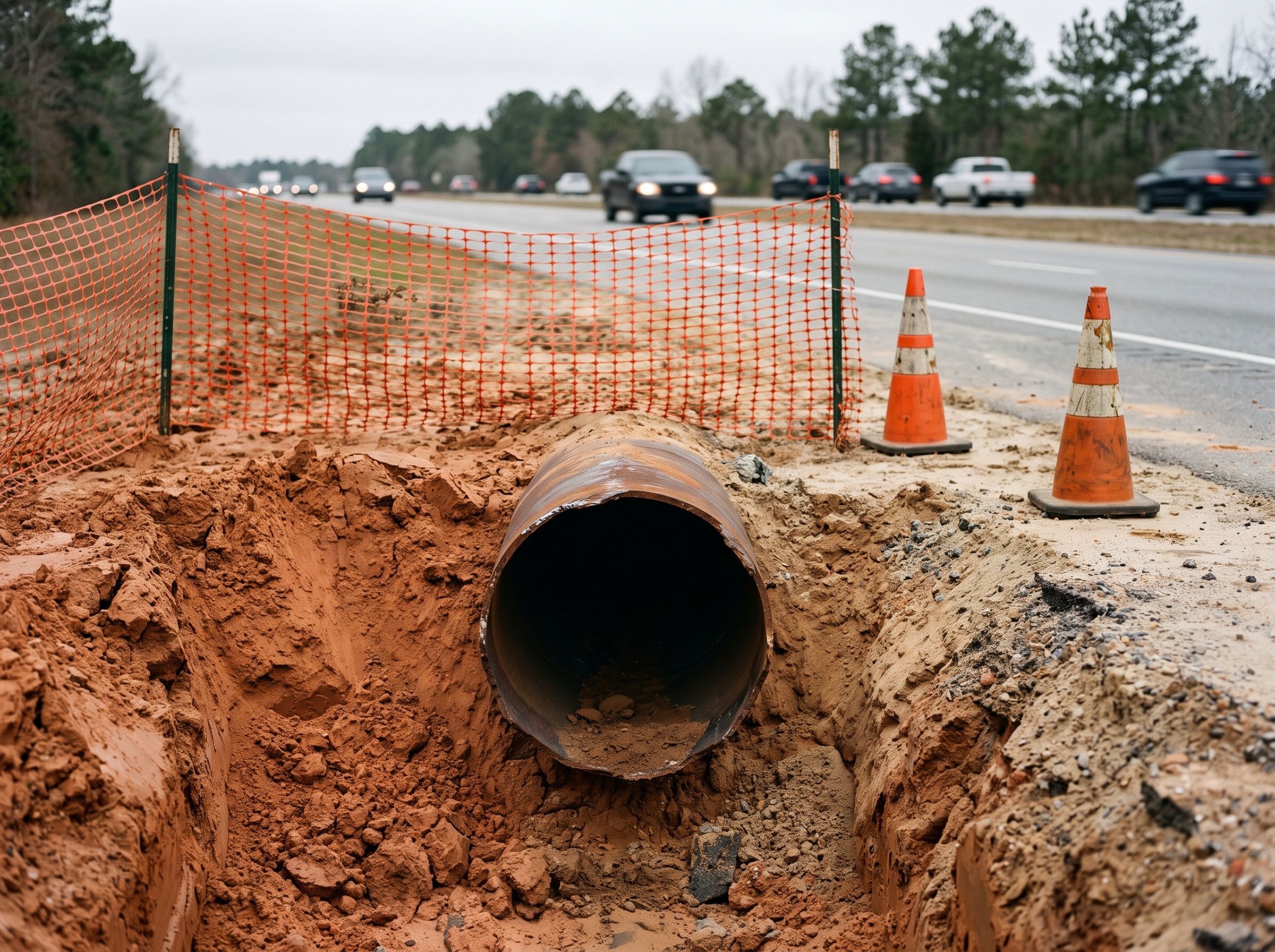
US-501 casing for water transmission
Jacked under five lanes and the median without a single lane closure, on an SCDOT encroachment permit, with the carrier pipe installed on spacers the same week.
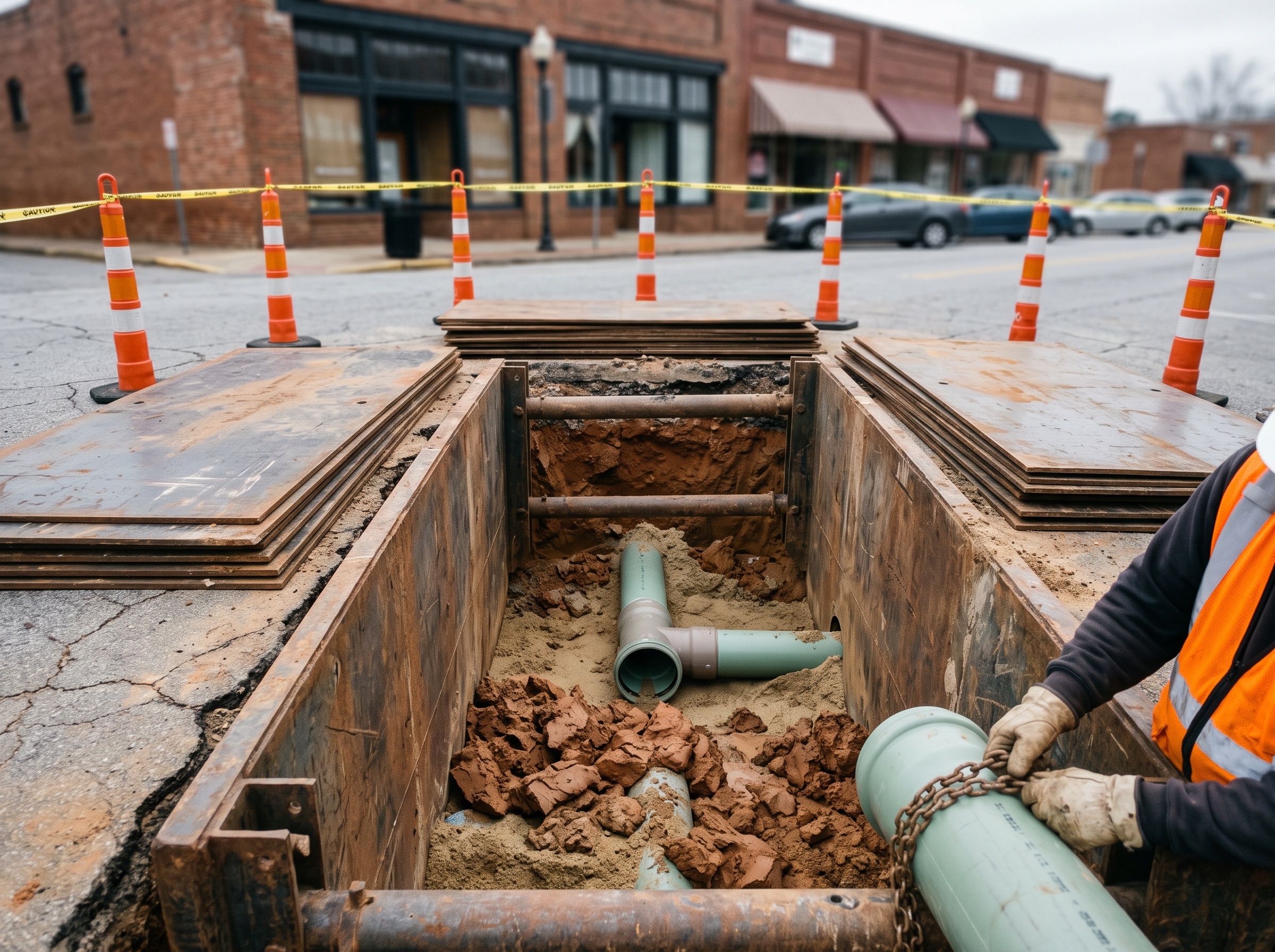
Downtown gravity sewer replacement
Replaced a failing clay line under a historic commercial block from three small pits, holding the invert to a half inch so the businesses above stayed open through the job.
06 - How a bore goes
From the locate call to the as-built
Most of the risk on a crossing is spent before the rig starts turning. This is the order we do it in, on every job, whether it is 200 feet or 2,000.
Locates and potholing
We call 811, verify the marks against the record drawings, and soft-dig every crossing we cannot see before a rig moves.
Survey and bore plan
The alignment gets designed, not guessed: entry and exit points, depth of cover, radius of curvature, and where the pits go.
Pits, shoring and setup
Engineered shoring, dewatering if the water table calls for it, and containment sized for the spoil the drive will make.
The drive
Pilot bore, ream and pull back, or jack the casing forward. Pitch, depth and grade recorded through the whole shot.
Test, restore, as-built
Pressure or deflection test, surface put back the way we found it, and a signed as-built in your hands for the closeout package.
Send us the plans.
Sheet, station and a soil report if you have one. We will tell you which method fits, what it costs, and - if it is the wrong job for us - who you should be calling instead.
Working across South Carolina · Coastal Plain · Midlands · Upstate · Eastern North Carolina · Coastal Georgia.